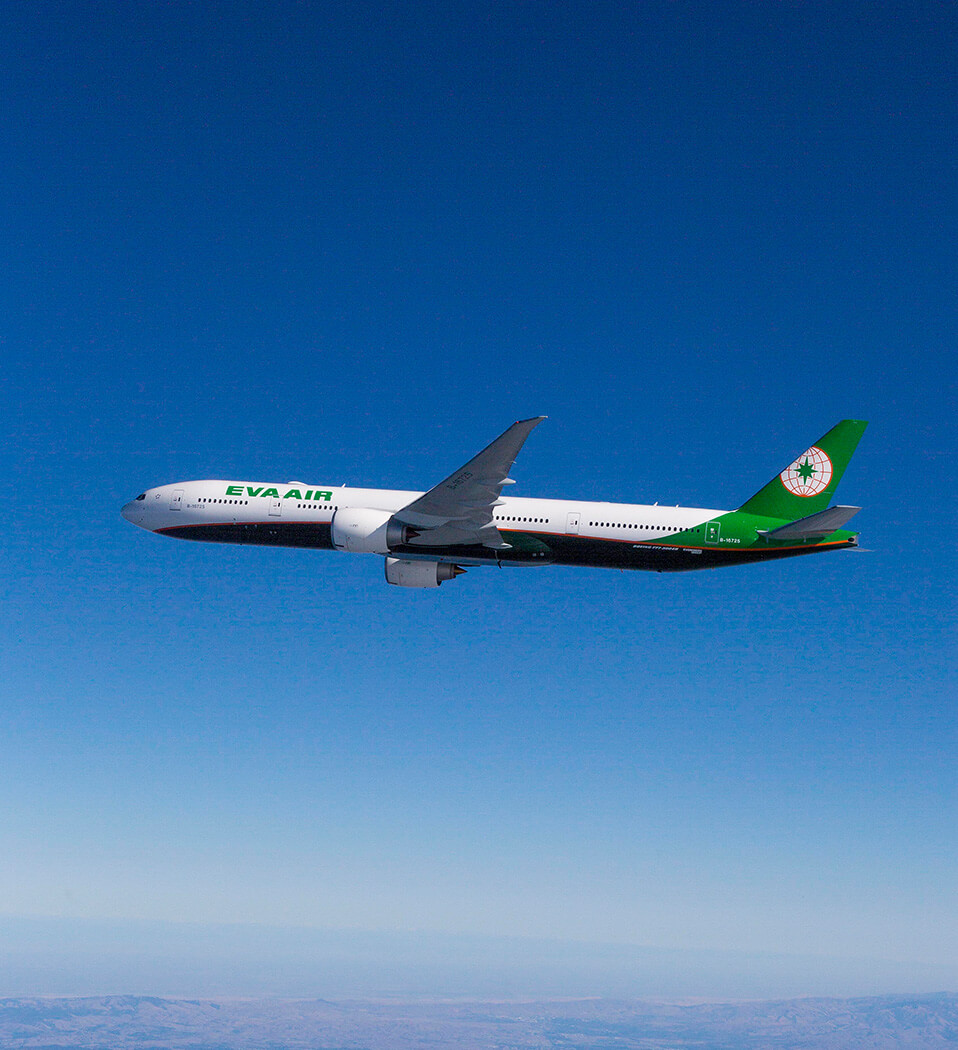
Green Travel - Carbon Offset Program
EVA Air launched our Green Travel - Carbon Offset Program in 2017. This was developed by EVA Air in collaboration with Climate Impact Partners, a UK-based environmental NGO. Through a carbon emissions calculator, passengers can calculate their trip’s emissions and make a one-time or per-journey voluntary contribution to support environmental initiatives related to their travel footprint. Climate Impact Partners helps select and fund carbon reduction projects that meet high-quality criteria and are certified by standards such as the Gold Standard or Verified Carbon Standard. This ensures that the carbon credits supported by passengers have tangible benefits, with verification documents provided by Climate Impact Partners.
Green Travel: EVA Air's Carbon Offset
Single-use Plastic Products Reduction and Commitment
EVA Air is committed to reducing the use of onboard single-use plastics items by replacing them with reusable, biodegradable, or recyclable alternatives. We have committed to reduce the consumption of onboard single-use plastic by 90% by 2030, compared with the 2019 baseline. Through continuous product improvements and collaboration with suppliers, EVA Air works closely with suppliers to develop of service items and products using recyclable and reusable materials while minimizing packaging. In 2025, several packaging improvements were implemented, including replacing selected inflight shopping non-woven bags with paper bags, using recyclable plastic packaging for long-haul Business Class amenity kit and pajama, and introducing lids made from recycled plastic for Economy Class meal trays. The design of onboard service items continues to incorporate the principles of recyclability, repulpability, and plastic-free solutions.
For non-plastic packaging, EVA Air uses cartons made from unbleached recycled paper printed with environmentally friendly ink and has adopted carton sealing tape made from 100% recycled PET film with water-based adhesive for e-commerce shipments. We also committed to working with suppliers to explore more sustainable packaging materials. Plastic packaging for onboard food items is also being phased out. In 2025, butter served on flights departing from London, Singapore, Ho Chi Minh City, Haneda, and Narita was changed to plastic-free packaging. EVA Air also monitors packaging materials used for self-operated merchandise, prints recycling labels on non-woven shopping bags to improve recycling rates, and continues working with suppliers to increase the use of recyclable plastics.
Use of Plastic Packaging Materials
|
Unit |
2022 |
2023 |
2024 |
2025 |
2025 Target |
| Total Weight |
Tonne |
47.2 |
212.2 |
254.3 |
268.9 |
266.5 |
| Recyclable Plastic Content |
% |
38.8 |
59.8 |
63.0 |
59.3 |
63.0 |
| Compostable Plastic Content |
% |
0 |
0.1 |
0.4 |
0.4 |
0.4 |
| Other Recycled Material Content |
% |
0 |
0 |
0 |
4.4 |
0 |
Sustainable and Low-Carbon In-flight Meals
To reduce emissions and nature-related risks associated with inflight meals, EVA Air continues to promote low-carbon meal options and sustainable sourcing strategies. In addition, EVA Air offers plant-based meal options as alternatives to animal-based proteins, helping reduce emissions associated with livestock production while lowering potential biodiversity impacts linked to agricultural land use.
EVA Air is also the first airline in Taiwan to incorporate sustainable agriculture outcomes into inflight meals. Through its procurement practices, EVA Air supports sustainable agricultural development, strengthens supply chain sustainability, and promotes greater awareness of environmental stewardship among passengers.
Airline Catering and Sustainable Food Waste Management
To ensure food safety and hygiene, EVA Air conducts annual hygiene audits of all catering kitchens based on the International Flight Services Association (IFSA) Catering Facility Hygiene Standards. In 2025, the audit coverage rate reached 100%. Catering kitchens are also managed in accordance with local regulations, and EVA Air encourages catering partners to continuously implement management systems such as ISO 14001, ISO 45001, and ISO 50001 to enhance sustainability performance. EVA Air recorded no violations of health and safety regulations in 2025.
EVA Air is committed to working closely with catering suppliers to reduce food loss throughout the catering lifecycle, from sourcing and transportation to meal preparation, loading, and unloading, while encouraging suppliers to monitor food loss. Food safety is managed through seven key control processes, including raw material inspection, transportation, cold chain management, cleaning and sanitation, food preparation, meal quality control, and temperature-controlled delivery. EVA Air also monitors food waste generated during meal preparation at Evergreen Sky Catering. Following the first outbreak of African swine fever (ASF) in Taiwan in October 2025, the government temporarily suspended the use of food waste for pig feed. As a result, 80% of food waste was recycled into animal feed, while the remaining 20% was disposed of through incineration.
Food Loss Management and Strategy
To reduce meal waste, EVA Air applies big data analytics and operational expertise to improve passenger load forecasts and optimize meal provisioning by route. Passenger check-in information, transfer passenger no-show data from the Amadeus Altéa Departure Control Customer Management (CM) system, and the Global Catering System (GCS) are used to monitor meal waste, optimize meal loading, and identify stations with higher meal waste for follow-up actions. Annual training is also provided to catering planners to strengthen meal planning capabilities. EVA Air is committed to reducing food waste per passenger, with a target of achieving a 10% reduction by 2030 compared with the 2023 baseline of 266.95 grams per passenger.
Due to strict biosecurity regulations designed to protect agriculture and prevent the spread of animal diseases, all unconsumed onboard meals from international flights are required to be incinerated and cannot be reused or recycled.
|
Unit |
2022 |
2023 |
2024 |
2025 |
2025 Target |
| Total Food Waste Generated (A) |
tonnes |
672.68 |
3,256.04 |
3,905.00 |
3,808.16 |
3,884.85 |
| Food Waste Recovered (B) |
tonnes |
517.31 |
2,652.14 |
3,195.98 |
3,100.75 |
3,163.19 |
| Food Waste Disposed (A–B) |
tonnes |
155.37 |
603.90 |
709.01 |
707.41 |
721.66 |
| Food Waste Recovered per Passenger |
grams |
216.84 |
217.44 |
218.50 |
207.02 |
- |